
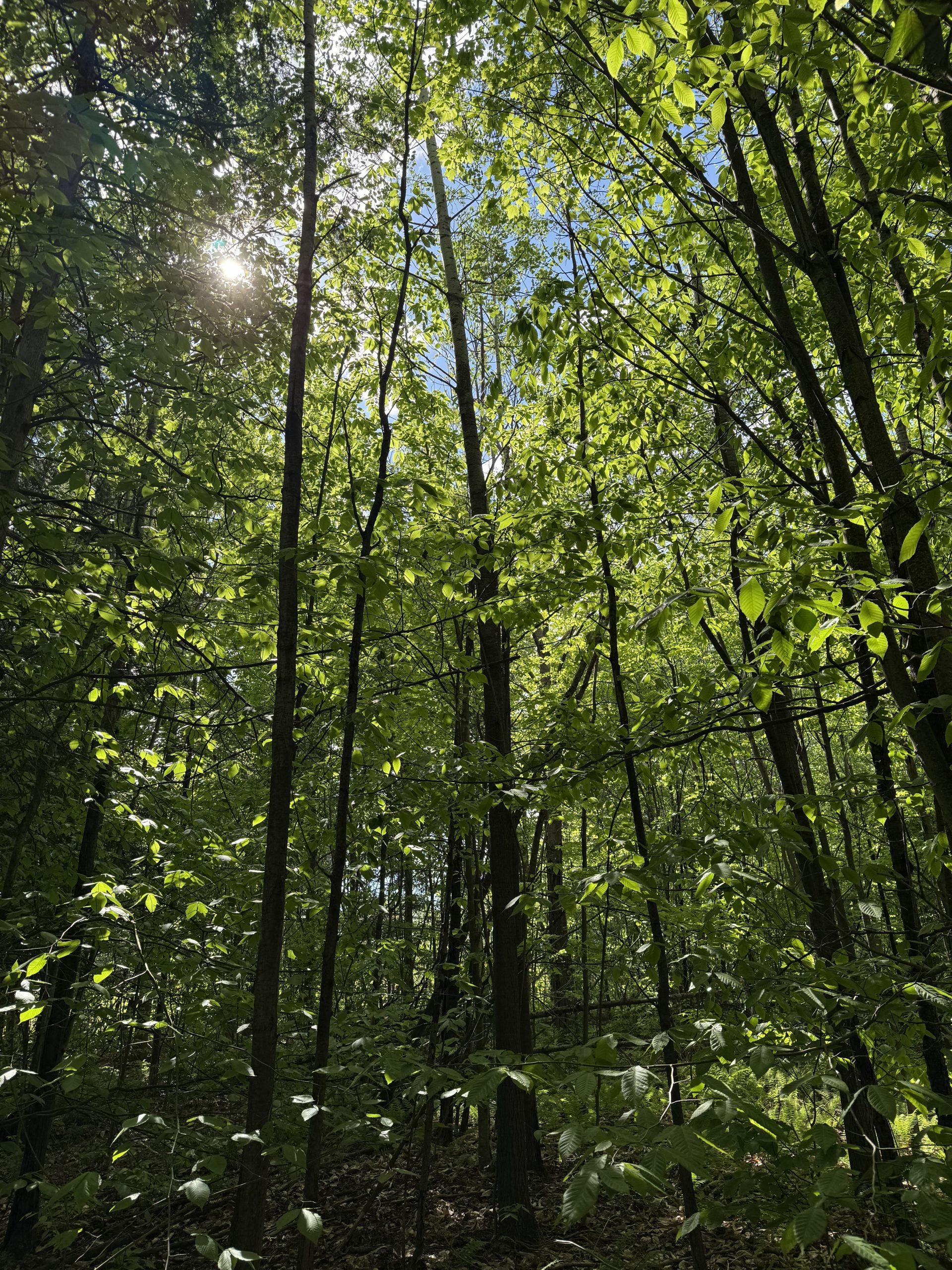
The NYT Summer Challenge starts off right; I love that it starts with nature connection. Touch grass is doable. I love that.
They lose me when they make the sweeping statement that all experts recommend being in green spaces without your phone, or with your phone turned off, so that you can receive the greatest health benefits.
I used to be critical of bringing phones into nature, my tagline was, “Unplug from the static and find calm.” I sincerely believed the phone got in the way, and the answer was to leave my phone at home. After years of practicing nature connection daily, by now there is no way I would leave without it, and I don’t feel bad about this at all.
Here’s why they lose me: you do not need to leave your phone at home to nature connect. It only distracts if you let it. Moreover, it’s a privilege to leave it at home or indoors.
As a woman who has hiked to urban forests and city parks consistently for many years, I can tell you: I take my phone. And I’m a card-carrying forest therapy guide.

Why? The phone is a tool. It helps me set a timer, so I can relax inside a contained time without worrying about the clock. When I am outside, sensing what is around me, I tend to lose track of time, especially if I see something unexpected, like 10 robins all at once, or a deer and her fawn. I can get lost in these moments of awe, so a timer is helpful when dealing with real time constraints. If you need to be at work, show up for appointments, enjoy events at the time they are scheduled, it can be helpful to have a tool keeping track of the time.
Whether it is to text someone, or to call for an emergency, it’s also the best way to get a hold of someone when you are out and about in parks or forests, in urban or rural spaces alike. Some of us don’t have the luxury of going completely off the grid, even for a few minutes a day. Setting time aside for yourself is excellent, and if you are a parent or caring for aging parents, you may still need to be available for emergency calls. It’s not everything, but it can help you feel more secure knowing you can take the time and are still connected if there is an emergency.
Some feel that it distracts because the phone requires your attention and pulls you away. This is up to you. If you don’t want to be distracted when you are doing something, from attending an event or going for coffee, or nature connecting, you can turn off notifications, or use Do Not Disturb or a Focus feature. Your time is yours, and you can use your phone to support you in being present.
I use the camera to connect further. Photography is a way of interacting with what’s around you. You take out your phone and look at what you noticed. You see it through the screen and look even more. It can help you further connect, and notice more texture, movement, light, colour. There is also the bonus of improving your way of seeing, perhaps artistically. Slowly and with practice, I’ve improved my ability in taking photos. And I enjoy it.
You can use your phone to ID plants. This is huge. Do you know how? If you have an iPhone, ask someone to show you or do this: select a plant photo in your collection. When it’s a clear photo, you will see a little magic sparkle around the “i” in a circle, click on it and this will open options for ID. It’s not perfect, it might be completely wrong, so always double check with other sources. You can also sign up with the app, iNaturalist, and they have humans checking your ID guesses. It’s one of the best for ID and I have learned a lot about plant ID using this app.

The phone also allows you to quickly jot notes, or record your thoughts as a voice memo. Nature inspires ideas, creativity, and you’ll want to be ready to record them easily when inspiration strikes.

It might be nice to leave your phone at home. In an ideal world, perhaps. If high-quality nature connection depends on leaving your phone behind, nature connection stays out of reach for a lot of us who, for one reason or another, are tied to our phones. Nature connection is for real people, with real lives, not just the experts. I’ve made that case for the rest of us before.
In my experience, the phone has increased my freedom, creativity, and sense of security. The real problem, and I’ve lived this too, is the social media feed. Next time, I am going to share with you why social media is the problem, and not the phone itself.
If you want to nature connect, supported by your phone, not distracted by it, here’s where: Sève. It’s a tool built to support presence in nature. Five questions. Your pocket, your pace. Take your break outside today.

Comments
2 responses to “It’s Not Your Phone, It’s Your Feed (Part One): Why I Never Leave Mine Behind.”
This is so true! Thank you for sharing your perspective. I love the ability to discover the outdoors with my phone, especially if I’m trying to avoid poison ivy.
Exactly! Our phones can be so useful out there, especially when avoiding poison ivy. Thanks for sharing, Gail. 🌿