
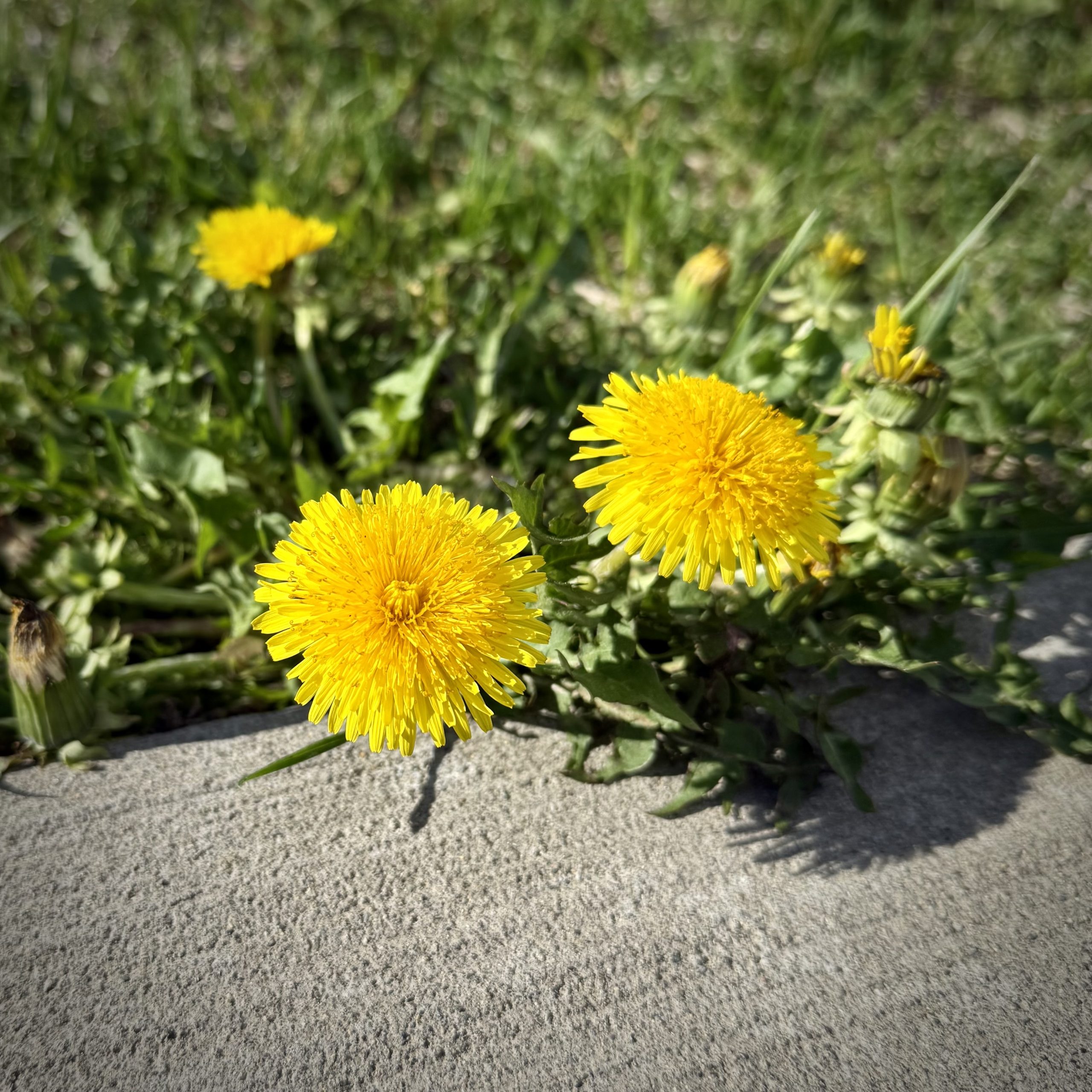
I meet people all the time who like the idea of connecting with nature, but they wonder if it’s really for them. Hugging trees makes them feel squeamish. They’ve never brought a plant home that didn’t end up brown and very dry, or ahem, dead. They like gardens but have no interest in digging in the dirt. They’d love to know more about plants, the way their grandparents did, but life got busy and so far the names have escaped them. They live in the concrete jungle and honestly? They love it there.
So who is nature connection actually for?
Is it the guy so comfortable with hugging trees that he and the tree might need a room? Or is it the garden gal who knows every flower, every blade of grass, and arranges it all just so? Is it the woman with all the letters after her name who can key out any plant on sight, like a walking field guide? Or what about the guy who can survive a week in the woods with nothing but a knife?
Are those the people who really get it?
Somewhere along the way we decided nature connection needed credentials. Many of us don’t feel cut out for it, but that’s not a personal failing. Research suggests nature connectedness has been declining for generations, as urban sprawl grew and the knowledge our grandparents carried simply stopped being passed down.

In the 1980s, Shinrin-yoku (forest bathing) was formalized in Japan during a time of rapid industrialization as a public health response to burnout culture. Dr. Qing Li and Prof Yoshifumi Miyazaki pioneered the research on nature influencing drops in stress hormones including cortisol. Over the years the movement took shape, notably in 2012 as the ANFT brought a guided therapeutic framework, or Nature Therapy, to North America. Since then, several other organizations have formed, expanding nature connection into an international mindfulness trend. Part of what has driven this movement is the science backing it up, and there is a great deal of evidence that nature connection is more than a luxe addition, a hobby. It is essential for optimal health. One example of how nature helps us is phytoncides, aromatic compounds released by trees and plants. Early studies of forest bathing found that they increase our natural killer cell production. Newer studies continue to describe forest bathing as a promising low-risk support for stress regulation and immune resilience. The science is still developing, but it adds more to what many people feel in their bodies, that is, time with trees improves our lives. This positive impact is enough that even doctors have even started handing out prescriptions to spend time connecting with nature, such as Canada’s PaRx program. And because many people struggle to follow through, not knowing what to do outdoors, feeling uncertain going alone, or simply not knowing how to build it into daily life, PaRx recently launched Connectors, linking patients with trained community practitioners.
Most recently, a 2025 randomized study found that simply noticing how everyday nature makes you feel, for as little as two weeks, measurably reduced anxiety and depression. You don’t need expertise. You just need attention.
This is a strong movement, but it isn’t new. Long before it had a name or a study attached to it, people everywhere were in relationship with the natural world. It’s worth asking who gets credited with discovering nature connection, and who was already there, had always been there, and was never consulted. At its best, this movement is a revival of something we’ve always needed.
We are nature, we are all invited. You don’t need to be a total plant person, outside of modern life, with twigs in your hair, to connect with nature.
You need to be a human. That’s it.

My own practice began during the pandemic, with small daily inputs of nature. I had just become an ANFT certified nature therapy guide, and I was also a life coach trained to help people tune into their inner knowing. You’d think I had it all figured out. I didn’t.
What I noticed on those daily walks surprised me. Feelings I couldn’t access indoors would surface the moment I stepped outside and started moving. I’d walk, sometimes cry, sometimes just breathe. By the time I reached the park I felt more like myself.
Over time a simple arch developed. Sense what’s around you. Sense your body. Name what you’re feeling. Ask what it’s telling you. Find the next small step. I wanted it to be doable, small was always fine.
I also always carried my phone. Some days I got lost in social media. Better days I stayed present, and eventually I fell in love with phone photography as a way of noticing, an extension of my appreciation for whatever the day held. The phone became part of the practice, not the enemy of it.
That experience planted a seed. A nature therapy audio guide you could use on your own time, in your own way, wherever you are. Sève is that, a small door, always open.

Nature meets me where I am. On the hard days, the messy days, the days when I don’t know what I’m feeling. It’s as simple as stepping outside, taking a breath, and finding yourself again.
If you live in a city, you may benefit more than most. Cities are now calculating exactly how much greenspace is needed to prevent measurable cases of depression and anxiety. We’ve come far enough from nature that we need software to tell us how much of it we need. And yet, here we are, finding our way back. A bench under a street tree counts. A neighbourhood park counts. Even a window with a view of green space counts.
Connection to nature isn’t something either you have or you don’t. You can get more out of being in nature by learning to pay attention. This is exactly why I built Sève, a simple doorway in, for real people, regardless of where they live. It is made to meet people in the messiness of daily life and not having it all figured out. They may have limited time for themselves, they may not know the name of a single plant, but they are curious and would like help in this daily practice. It is built for real lives, so you can make the most of your time. It’s slow tech: no algorithm, no notifications pulling you away from yourself, just you, and a prompt, wherever you are. On the days when you want a little more, there is a library of audio guides. At the heart of it all are five simple questions, a trail back to yourself, wherever you are.
Nature connection is for everyone, especially those of us with real lives, full schedules, and concrete under our feet. If anything, the further removed you feel, the more you stand to gain. You are nature. Of course it’s for you.

Comments
One response to “You Were Built for This: Nature Connection for the Rest of Us”
It’s simply a matter of making nature therapy a priority. It’s not just the trees. It’s birds, animals, reptiles, worms, bugs, grass, fruit shrubs and trees. It’s the life around us. We connect with it if we want to and if we care to. Walk in the fresh air, sit on a bench. Be observant. Use your physical senses. See what happens.