
By Tamara Schmidt, Nature Therapy Guide & Experiential Herbalist
Shrunken Hippocampus, Shrunken Life?
I remember being able to write exams with ease. And then, after a few years into my relationship, I couldn’t. Looking back, I can now see how deeply trauma healing and nature would become part of my journey, even before I understood the neuroscience behind it. I found myself in a situation that slowly eroded my sense of safety and worth, not because anyone meant harm, but because I hadn’t yet learned how to protect what mattered inside me. I didn’t feel seen, heard, or understood. I didn’t feel accepted. Over time, I began to believe it.
Research shows that prolonged emotional abuse can shrink the hippocampus, the part of the brain responsible for memory, learning, and emotional regulation. It’s no wonder that tasks I once found easy, like writing exams or recalling details, became foggy. My brain was no longer functioning as it once had.

Your Inner World Shapes Your Outer World
The people around you matter, but the voice inside you matters even more.
What stories are you telling yourself? What patterns are still quietly shaping your choices?
Part of the reason I was vulnerable to those dynamics is because earlier experiences had already taught me to expect them. The emotional tone felt familiar. And in that familiarity, I found myself open to what didn’t serve me, because it echoed something I had already known.
That’s what trauma does, it wires us to accept what once felt normal, even when it’s harmful.
But healing begins when you become a safe presence for yourself. When you start showing up with gentleness, awareness, and care. That’s when your nervous system can finally exhale.
And when you start recognizing your patterns, not with shame, but with compassion, you begin to make different choices. Better ones. Healthier ones. Aligned ones.

Healing Isn’t Just About Leaving the Villain Behind
Even if someone in your life played the role of the wounded lead, or simply couldn’t meet you with the love and steadiness you needed, your healing is not about them. It’s about you.
Your trauma may still shape your actions and outcomes until you take time to face it, to tend it, and to rebuild what’s possible. Because even when truly good people and promising opportunities show up, unhealed wounds can make it hard to trust, receive, or thrive.

Healing after emotional abuse helps you meet goodness with readiness, and stay grounded when imperfections arise. (Spoiler: we all have them.)
If you’ve experienced significant trauma, you may have developed heightened sensitivity, what some might call “special sensitivities.” It’s not a weakness. It’s a gift that just needs care.
Thanks to mirror neurons (those brain cells that allow us to sense and reflect others’ emotions), highly sensitive people often feel what others are feeling, intensely. Without boundaries, you might begin to carry pain that isn’t yours, reenacting familiar trauma instead of rewriting your own story.
And once I began to see that the pain wasn’t just about who hurt me, but about what remained unhealed inside me, I realized I couldn’t just paint over it. That’s when the oil painting metaphor came alive for me.

Layer by Layer: The Oil Painting Metaphor
What you resist persists.
I had a burning desire to make the most of my life. I didn’t want trauma to hold me back. I was fiercely independent and determined—call it karma, call it trauma, but until I gave myself time and space to face these recurring patterns, I kept recreating the same drama in different costumes.
I found myself stuck in cycles of feeling “less than”, second-rate, second-class, invisible. Why? Lord knows. But I do know this: it’s mine to solve, mine to heal, and mine to rewrite.
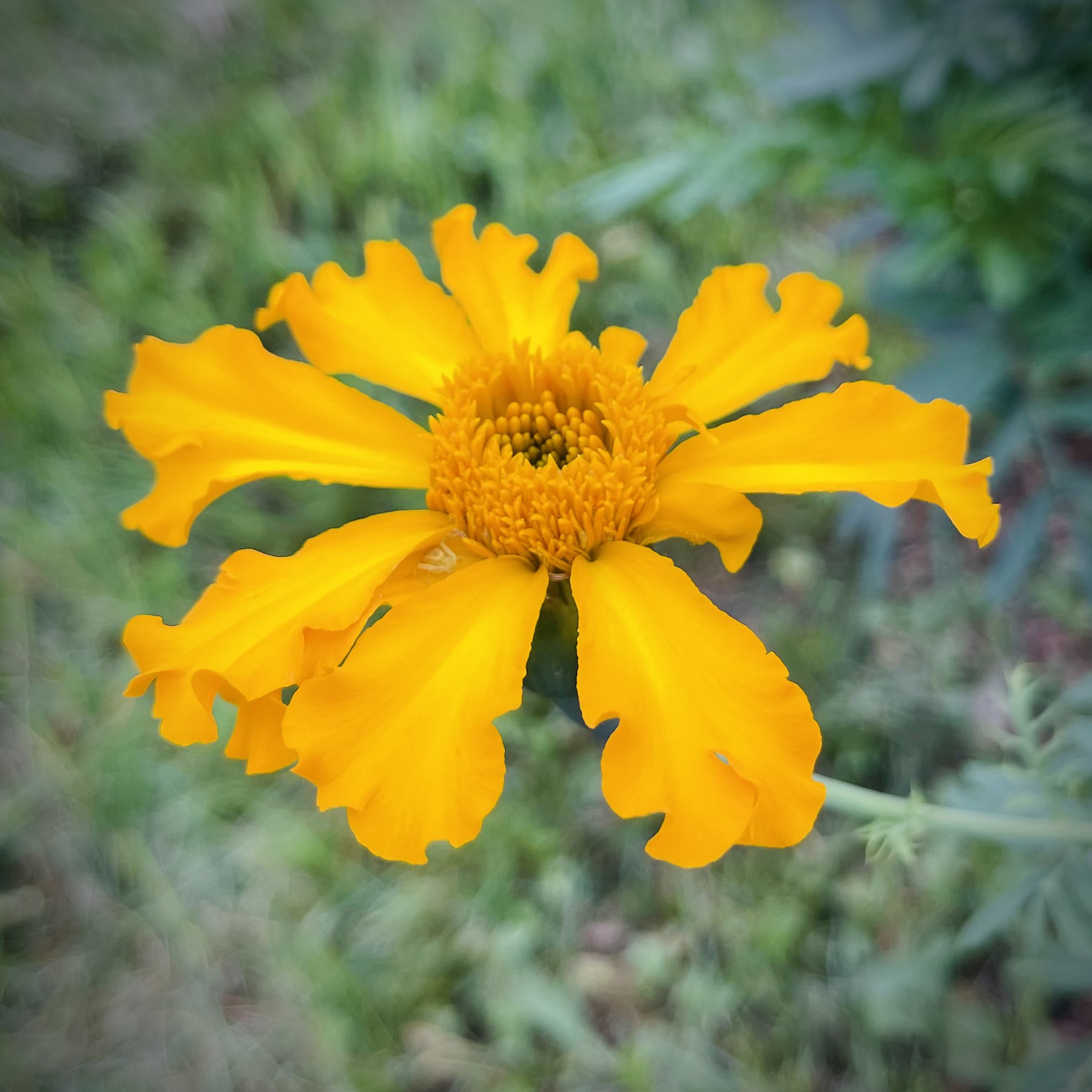
Healing is like working with oil paints. Your life is a canvas, and every day is another layer of colour and texture. If you’ve experienced big trauma and try to paint it over with a bright yellow, the texture underneath still shows.
The goal isn’t to erase the past, it’s to integrate it. Every layer, every brushstroke, becomes part of your unique expression. Your healing isn’t a cover-up. It’s a masterpiece in progress.

Your Trauma Recovery Toolkit
How do you move toward sunnier spaces?
Start by organizing your toolkit. I finally made time for focused healing, and everything changed.
✔️ Cover the basics: nourishing food, safe shelter, loving connections
✔️ Surround yourself with people and practices that affirm your worth
✔️ Visualize the future you want—your nervous system listens
✔️ Practice kindness rituals, meditation, EFT, and slow breathing
✔️ Say no to what drains you, yes to what restores you
✔️ Know yourself, especially your patterns
For example, I’ve learned that when I’m pushing to make something work, it’s often a sign that it isn’t working. That energy of forcing is a clue to pause, breathe, and step back. Recognizing these patterns, your tells, your traps, helps you make wiser choices, not just reactive ones.
And for me, one of the deepest layers of this healing work has been coming to know, without a doubt, that I am worthy.
Not because someone else says so. Not because I achieve or perform. But because I am.
This isn’t ego. It’s not surface-level affirmation or chasing praise. It’s a quiet, steady knowing. A spiritual remembering.
Nature helps me see my worth, not as something I have to prove, but as something I am, inherently. Just like a tree or a wildflower or a patch of moss. In both my success and failure, I am still me. Still here. Still showing up, doing the best I can, in full integrity with myself.
And honestly, that’s enough.
You may not be able to change the past, but you can shape what happens next. As C.S. Lewis said, “You can’t go back and change the beginning, but you can start where you are and change the ending.”
And yes, at some point, we have to face the music, because if we don’t, it keeps playing in the background, running the show.
Life asks a lot of us. But we can choose the kind of hard that leads to freedom.
One day, during one of my regular nature walks, I came across these small treasures in a school’s Heart Garden.
Tiny affirmations—laminated and hand-lettered—fluttering on a fence.
Their message was simple, but it hit me deep.
We can’t go back and change what happened.
But we can start here.
We can still grow.
I took these photos because I knew I’d want to remember this.
Maybe you’ll want to remember it too.


I needed something that could meet me where I was—something steady, nonjudgmental, and quietly powerful. For me, that was nature.
Why Nature Helps: Healing After Emotional Abuse and the Brain’s Brilliant Repair
Nature doesn’t judge.
It doesn’t rush.
It doesn’t gaslight or guilt-trip.
It offers quiet companionship and steady rhythms that help regulate a frazzled nervous system. When you step outside and listen to birdsong or feel the wind move through the trees, your body begins to remember what safety feels like.
I stumbled upon this “cure” quite honestly. I started walking every day. I let myself feel. I came home lighter. More relaxed. More ready to live in a new way.
It was only after building this nature practice that I discovered the research backing what I had felt all along. Nature works. Here’s why:
- It reactivates your prefrontal cortex (your calm, thoughtful mind) through soft fascination
- It quiets your amygdala, your body’s fire alarm, reducing anxiety and hypervigilance
- It helps regrow and repair your hippocampus
- It strengthens the insula, reconnecting you with bodily sensation and emotional awareness
- It supports your anterior cingulate cortex, improving emotional regulation and presence
- It quiets the default mode network, reducing rumination and self-criticism
Isn’t it brilliant to see what’s possible, just by returning to nature?

Let’s Walk This Path Together
If something in this post resonated with you, if you’re longing for healing, groundedness, and emotional clarity, I invite you to begin where you are.
My Coaching + Nature Connection program blends deep listening, somatic support, and seasonal rituals to help you come home to yourself. We focus on rebuilding trust, easing the nervous system, and reconnecting with joy, creativity, and clarity.
This isn’t a quick fix, it’s a return to your true self.

May you find a small, meaningful way to tend to yourself today, whether that’s stepping outside, slowing your breath, or noticing beauty in an unexpected place.
With care from the trees (and me),
Tamara
If you want a nature-based way to support your brain while you heal, I wrote more about this in Tending Our Fire in Winter: How Nature Connection Supports Women’s Mental Health.
