
When life has been too much for too long…
Stress, loss, and trauma don’t just fade away when the moment passes.
Your nervous system can stay stuck in high alert, hypervigilant, tense, scanning for danger, or slip into the opposite extreme, a flat, numb state where everything feels far away.
Both are exhausting. They make it harder to think clearly, connect with others, or find the motivation to create a life you love.
Creating a Nervous System Sanctuary is a way to tell your mind and body:
“You are safe. You can rest here.”
And while I’ve created sanctuary spots indoors, nature has been the most accessible and powerful place for me to begin. The beauty? You can create it anywhere, even in a small apartment.
Why Nature Helps You Heal
1. It Shifts You Into the Present Moment
Trauma often keeps us anchored to the past or bracing for the future.
Nature invites you back to now: the coolness of moss under your hand, the flutter of a sparrow’s wings, the warmth of sun on your cheek.
This kind of sensory noticing isn’t just poetic, it activates your parasympathetic nervous system, the “rest and repair” mode your body needs to heal.
(In one 2019 study published in Frontiers in Psychology, participants who spent just 20 minutes in nature had significantly lower cortisol levels, the stress hormone, afterward.)
2. It Helps You Name and Process What’s Happening
When you slow down in a living, breathing environment, you have space to notice:
- My chest feels tight.
- I’ve been holding my breath.
- I feel a little lighter now that I’ve walked here.
Once you notice, you can ask: What do I need right now? Sometimes the answer is rest. Sometimes it’s movement. Either way, you’ve shifted from autopilot to choice.

3. It Puts Problems in Perspective
I’ve stood under a maple whose roots have held the same soil for over a century. My own worries didn’t vanish, but they shrank enough for me to take a deeper breath.
Nature has a way of quietly reminding you: you are part of something much bigger, and this moment is not the whole story.
4. It Gently Strengthens Your Brain
Nature isn’t static. The shifting light, moving leaves, and changing seasons create a dynamic backdrop that keeps your senses engaged. This variation supports neuroplasticity, your brain’s ability to create new, healthier pathways for thought and emotional regulation.

Your Nervous System Sanctuary: 3 Steps
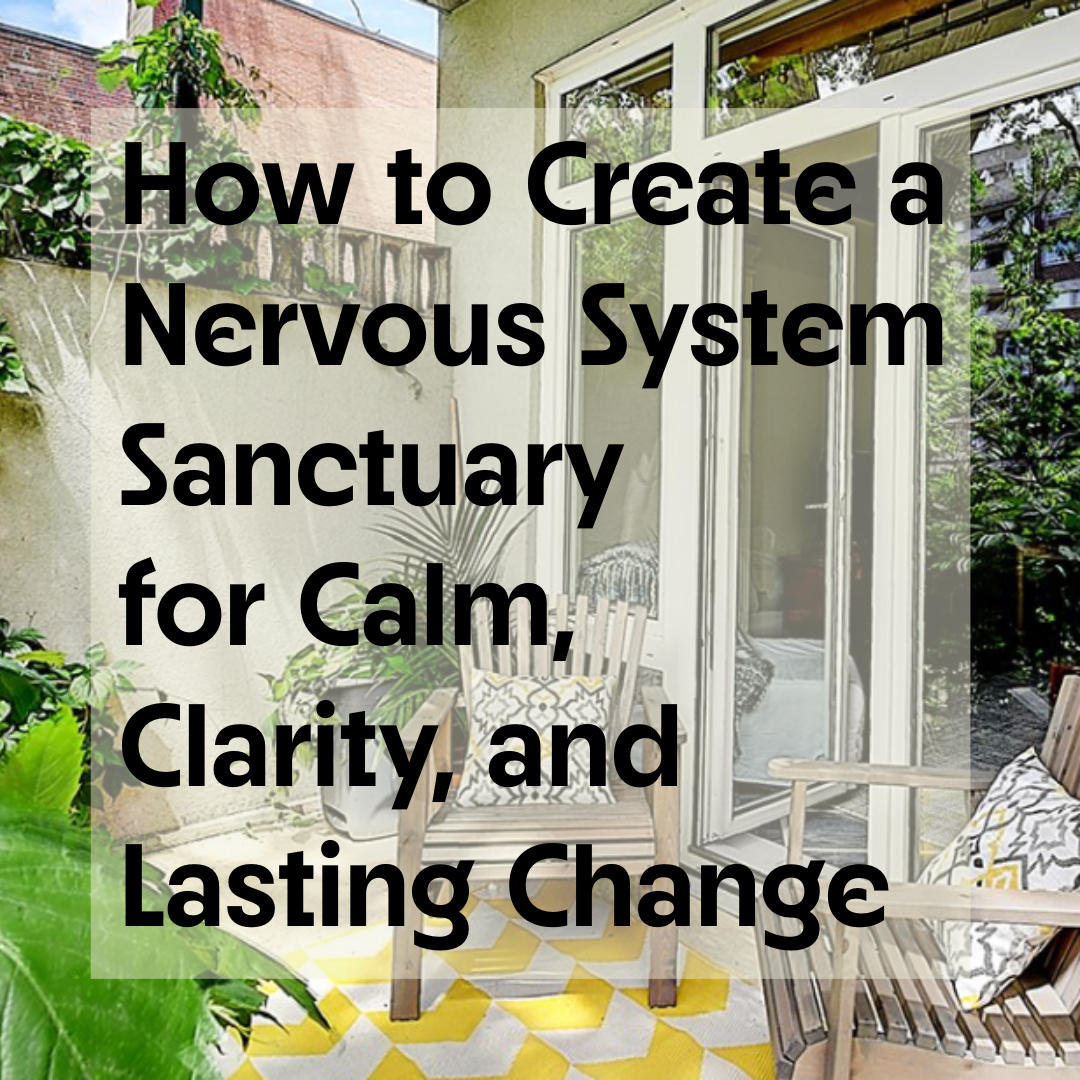
You can adapt this whether your sanctuary is a forest, a balcony garden, or a favourite chair with a view.
Step 1 – Choose Your Spots
Aim for a mix of:
- Home base spots: A chair near a sunny window, a nook with plants, a favorite blanket.
- Nearby nature spots: A park bench, a garden path, a shady tree on your block.
- Occasional retreats: Forest walks, a lakeshore, a botanical garden.
Tip: Knowing 3–5 sanctuary spots makes it easier to keep this habit, no matter your schedule or the weather.
Step 2 – Design for Comfort & Presence
Borrow from eco-design and biophilic principles:
- A view of green (plants, trees, water)
- Comfortable seating or natural perching spots
- Temperature awareness (layers outdoors, cozy throws indoors)
- Soundscape that feels safe (nature sounds, or earplugs if noise is too much)
- Textures that invite touch (smooth stones, soft blankets, natural wood)
Step 3 – Make It a Ritual
Visit your sanctuary daily, even 5 minutes counts.
No agenda except to slow down, breathe, and notice. Over time, your body will begin to associate that place with safety, making it easier to reset after stress.
Common Doubts — And Why They’re Myths
“I don’t have time.”
You don’t need an hour. You just need enough time to change the channel in your nervous system. That can be 5 minutes, even standing barefoot in the grass before work. Over a week, that’s 35 minutes of nervous system repair you wouldn’t have had otherwise.
“I can’t get to nature every day.”
Indoor sanctuaries work too. Even a view of nature through a window or in a photograph can reduce stress and restore attention (Ulrich, 1984).
“It sounds nice, but will it really help?”
Yes. Regular nature connection has been shown to improve working memory, attention, and emotional regulation, all functions impacted by chronic stress (Health & Place, 2020).

The Ripple Effect
A daily nervous system sanctuary practice can:
- Lower anxiety and lift mood
- Boost creativity and problem-solving
- Increase patience in relationships
- Support deeper, more restorative sleep
- Build long-term resilience
(Fact: A 2020 review in Health & Place found that people who engaged with nature regularly reported higher life satisfaction and lower symptoms of depression.)
Your Next Step
This week, choose your first sanctuary spot and make a date with it. Then, download my free Nervous System Sanctuary Guide, it will help you choose your other spots, add comfort touches, and turn this into a daily ritual that sticks.
Click here to download your Nervous System Sanctuary Guide.

If you’re craving deeper grounding and emotional steadiness, you may also enjoy my reflection on rebuilding through nature:
Belonging in Nature — What I Learned When Life Fell Apart.
