
What if the voice in your head that says “I’m too old, too late, too much, not enough… I can’t”… isn’t truth?
What if it’s a well-rehearsed survival script, loud, convincing, and wildly unqualified to run your life?
And what if goal-setting doesn’t need more pressure?
What if it needs a different operating system: a steadier body, a kinder lens, and a mindset that doesn’t assume the universe is out to work against you?
That lens has a name: pronoia. It’s the suspicion that life might be conspiring on your behalf, not because you’re special, but because you’re alive. (And yes, there’s a caveat we’ll get to.)
Maybe you’ve done this: you woke up motivated on New Year’s Day, planned the ultimate fresh start… and two days later your brain started negotiating like it’s unionized. You fell off all the wagons and did a faceplant into the snow.
You didn’t lose willpower, you lost safety.
And the old story rushes back in: “See? I can’t stick with anything.” Might as well check the post-holiday sales on Christmas cookies, I’m not cut out for betterment. Maybe next year. 😕
Goal setting gets brutally hard when you’re building from pressure (fight/flight), treating your thoughts like facts, and skipping recovery, so your system quietly resists change. If that’s you, you’re not weak. You’re wired for protection.
This post explores a gentler, smarter approach: pronoia + thought work + nature as a nervous system reset so you can build goals from steadiness instead of self-punishment.
What’s pronoia?
In older academic/clinical usage, pronoia has been described as a kind of “reverse paranoia,” sometimes framed as unrealistic positivity.
But in everyday life, people use pronoia in a simpler, more useful way: as a counterweight to automatic negative thinking, the kind that masquerades as “being realistic,” when it’s often just fear doing math.
Negative thoughts can sound practical. Safe. Intelligent.
But what if there is little or no truth in them?
What if they limit you more than anything else?
Some people, like your friends, your family, even you, won’t believe change is possible until you see results. You don’t arrive until you get there. And wishing isn’t enough. How do you manage yourself through the messy middle?
The real question becomes:
How do you create enough safety to keep showing up long enough to see yourself through?
Pronoia, as practice, is a deliberate stance:
“I’m willing to look for evidence that things can go well, and I will act from that possibility.”
Not denial. Not pretending pain or setbacks didn’t happen.
More like: I refuse to let my fear narrate the ending.

Thoughts aren’t facts
Here’s the simple map:
Circumstances/Facts → Thoughts/Interpretations → Feelings → Actions → Results
We walk through life collecting experiences that shape our understanding. The problem is not that we learn from experience, it’s that we sometimes build sweeping conclusions from limited evidence.
For example:
- One relationship ended badly → “Love never works for me.”
- One time you froze in conflict → “I can’t speak up.”
- One project flopped → “I’m not the kind of person who succeeds.”
Knowing your thoughts may not be the whole story can be deeply liberating, especially when your mind uses past difficulty as “proof” that you can’t.
Because when you believe the story:
- you try less,
- you notice fewer opportunities,
- and you quit sooner.
The facts in front of you are rarely the whole story, so why not stay open to possibilities you can’t yet see? Support. Connection. A different ending.
The trap (especially with trauma-informed limitations) is that we start labeling interpretations as facts:
- “They didn’t text back” becomes “They hate me.”
- “I feel behind” becomes “I am behind.”
- “I’m scared” becomes “I can’t do this.”
Pronoia interrupts the chain right at the thought level:
- “They didn’t text back” becomes “I don’t know the story yet.”
- “I feel behind” becomes “I’m in the middle of becoming.”
- “I’m scared” becomes “My nervous system wants safety, not sabotage.”
Try This
ON YOUR NEXT WALK: THE TRUTH CHECK
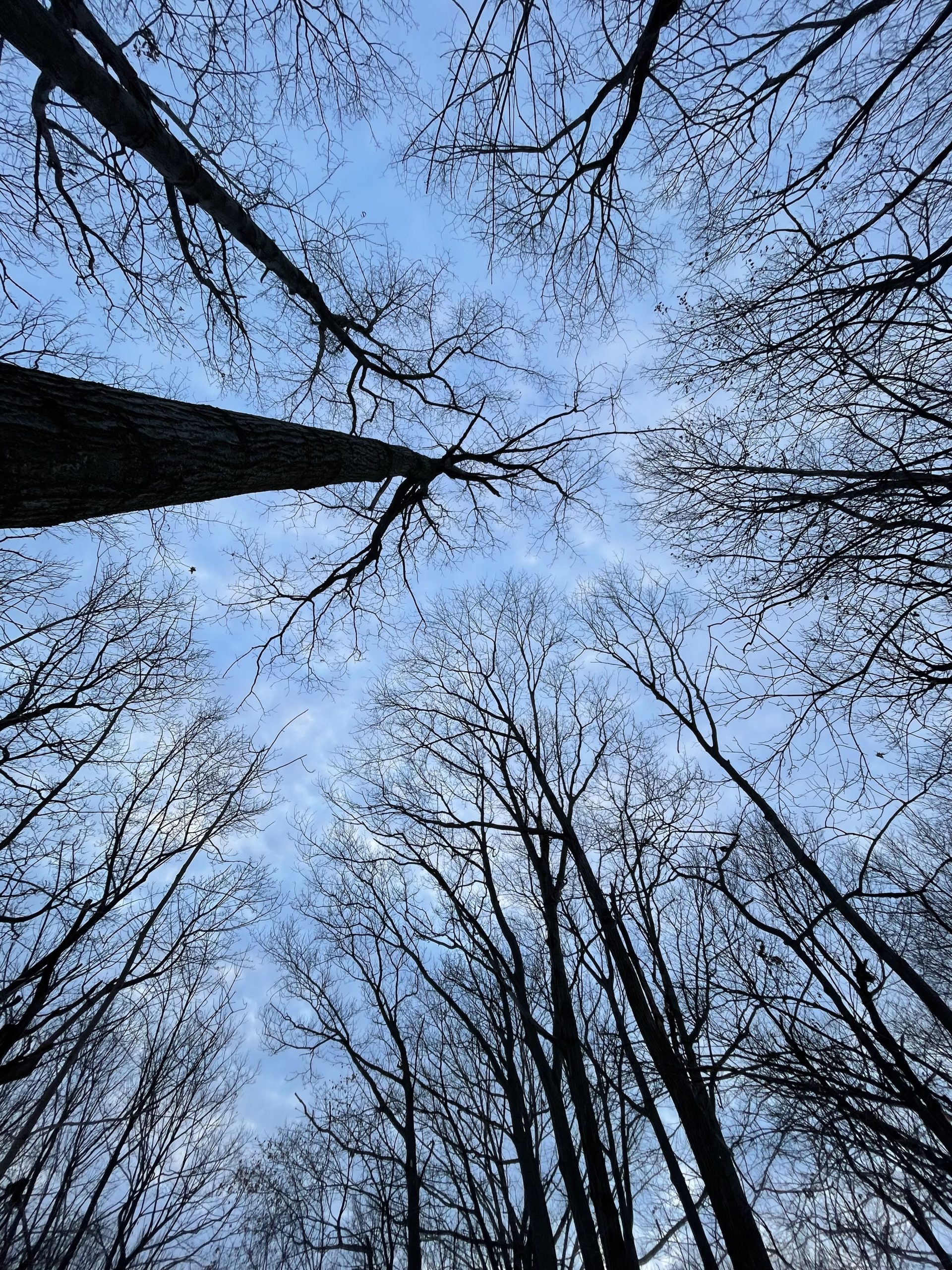
Pause somewhere you like, by a tree, a field, a patch of sky.
Then, using a notes or voice memos app on your phone, state the thought that’s been running the show.
Now say: “This is a thought I’m having, not a fact.”
And explore:
- How do I feel when I believe this thought? (Where does it land in my body?)
- What does that feeling make me do, or stop doing?
- What’s a less painful thought that’s still true? (Something I can actually live with.)
Try:
- “I don’t know yet.”
- “I’m in the middle of becoming.”
- “My fear is trying to protect me.”
- “One step is enough for today.”
Look up again. Exhale.
If your body relaxes even a little, you’ve found a thought your system can work with.

Why nature helps in achieving your goals
If your mind is a courtroom, anxiety is the prosecutor who never rests.
Nature helps you step out of the courtroom.
Research suggests that time in natural settings can reduce rumination and stress physiology. That matters because stress doesn’t just feel bad, stress can impair executive functions like attention, working memory, and flexible thinking.
Translation: when you’re flooded, you plan worse, choose worse, and quit faster.
Nature doesn’t “fix you.”
It simply helps your system come back online.
When I’m outside, I can feel my feelings more easily than when I’m indoors. I feel more supported, more like myself. My mind stops spinning. I notice frost patterns, changing skies, little surprises with birds and squirrels.
And suddenly my system remembers: I’m here. I’m safe enough.
From that steadier place, I get real energy for my projects and my life. I’m calmer. More creative. More willing to try again.
So yes, nature is a good place to explore your thoughts and align with your goals.
It’s also a good place to renew your spirit, daily.

The surprise ingredient in my weight-loss story: safety
Relaxing and being is an important part of goal setting. In my own weight-loss journey, it took both effort, like regular exercise (dance, in my case), and nourishment: reducing inflammatory foods, adding healthy whole foods.
What surprised me is that weight loss didn’t happen through pressure, or forcing myself into a program. My body needed to relax and feel safe.
When I did the things and made room for recovery, like Epsom salt baths, better sleep, genuine downshifting… and I started achieving my goals.
For someone who believed she had to be “better” to be worthy, this was a serious eye-opener.
Effort (dance + nourishment) + Recovery (sleep + baths + downshifting) = momentum
That is trauma-informed goal setting, even if I didn’t call it that.
Because a body that never downshifts will eventually treat your goals as threats, and then it will do what it’s designed to do. It will protect you with procrastination, fog, cravings, avoidance, and collapse.
Pronoia asks:
What if your body isn’t broken, what if it’s protecting you with outdated settings?
Pronoia without bypassing
Let’s name it: pronoia can become a shiny form of denial.
So here are the guardrails:
- Pronoia is not: “Everything happens for a reason.”
Pronoia is: “Even this can be worked with. Even this can shape me without defining me.” - Pronoia is not: “I must stay positive” (or accept gaslighting, abuse, or cruelty).
Pronoia is: “I can tell the truth about what’s happening, and still choose my next step.” - Pronoia is not: “It will all be okay. The universe will do it for me.”
Pronoia is: “I will collaborate with life by showing up, listening, trying again.”
There’s a bit of magic in trying, not because you’re denying reality, but because your willingness to act creates momentum.
And to be clear:
Pronoia isn’t certainty that everything will go your way.
It’s refusing to live as if life is automatically against you.
For anyone who has felt diminished by setbacks, that shift is a game changer.

Nature-based goal setting for sensitive women: the 3-part Pronoia Method
Step 1: Regulate (2 minutes)
Before you plan, downshift:
- one hand on chest, one on belly
- exhale longer than inhale, 5 rounds
- look out a window or step outside
- (optional) envision what you want, without forcing
This isn’t fluff. When you’re dysregulated, your thinking narrows. You need steadiness to plan well.
Step 2: Reframe (2 minutes)
Notice any painful thoughts:
I can’t. I won’t. It’s impossible.
Ask:
- “What am I calling a fact that’s actually a story?”
- “What’s a more accurate thought I could try on?”
Not fake positivity, find what feels more true. Accuracy.
Step 3: Micro-commit (2 minutes)
Choose one specific action you can complete today.
Like:
- send the email
- walk 10 minutes
- outline 3 bullet points
- put the shoes by the door
- open the doc and write the first sentence
Specific, meaningful goals tend to outperform vague “do your best” intentions.

With safety first: yes, you can
If you’re used to pushing through, pronoia can feel unfamiliar at first, almost suspiciously kind. Like, what?
But if you’re rebuilding after years of self-doubt, that unfamiliarity is worth exploring. It might be your system recognizing a safer way forward.
You don’t need more pressure. You need a steadier starting place. Start with one small true step your nervous system can tolerate, and repeat it. Momentum loves what’s repeatable.
With safety first: yes, you can.
And if you want a calm, practical way to use nature connection as a state change, especially in winter, my Winter Nature Guide is designed for exactly this: fewer spirals, more steadiness, and small doable resets you can actually repeat.
If January feels heavy—like you’re behind before you’ve even started—you might also like this companion post: Let’s Not New Year, New You: A Kinder January Reset. It’s a season-aware reset built around light, rhythm, and tiny nature connection, so you can feel steadier without pushing through.
I talk more about winter blues, women’s mental health, and simple nature practices in Tending Our Fire in Winter: How Nature Connection Supports Women’s Mental Health.
If your mood feels persistently low or anxiety is disrupting daily functioning, you deserve real support, please reach out to a licensed healthcare professional.
Further Reading
- Nature + rumination: Bratman et al. (2015, PNAS) — A 90-minute walk in nature reduced rumination and decreased activity in a brain region linked to repetitive negative self-focus (vs. a cityscape walk).
- The “nature pill” dose: Hunter, Gillespie & Chen (2019, Frontiers in Psychology) — Found stress-biomarker benefits in daily-life nature visits, with the most efficient cortisol drop around 20–30 minutes.
- Why pressure impairs planning: Arnsten (2009, Nature Reviews Neuroscience) — Explains how stress can rapidly impair prefrontal cortex functions (working memory, self-control, flexible thinking)—the exact skills you need for follow-through.
